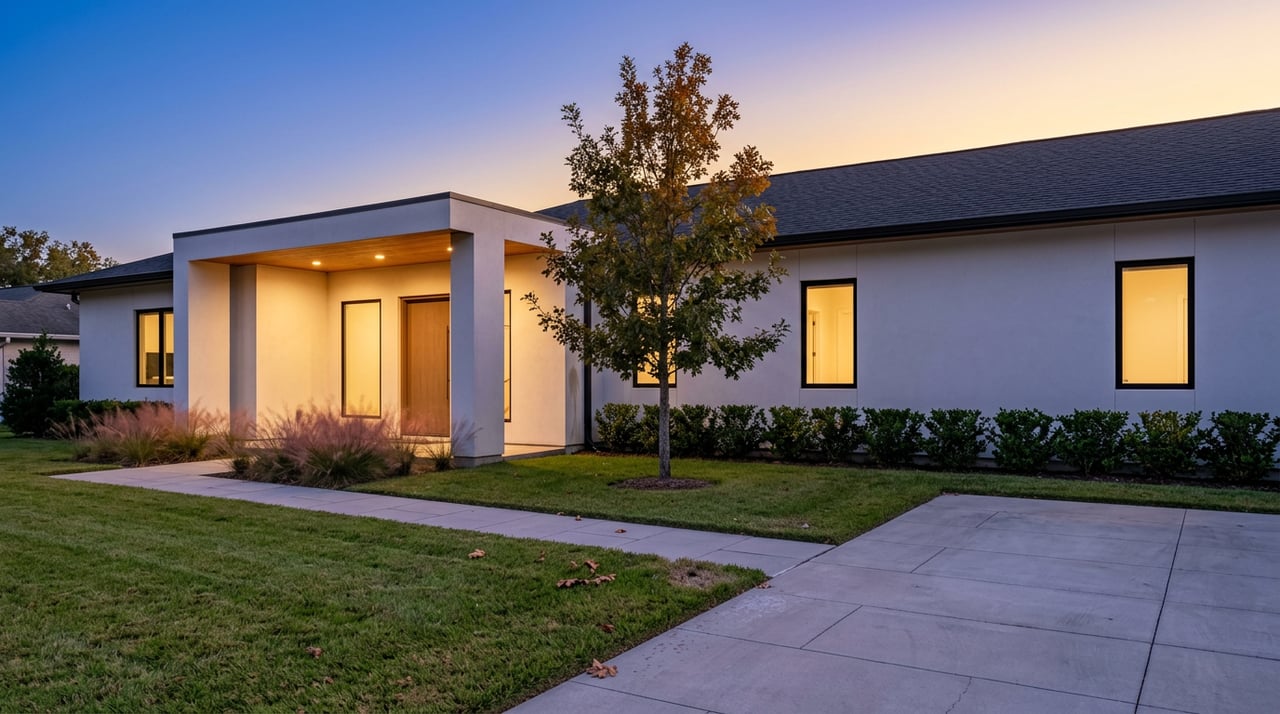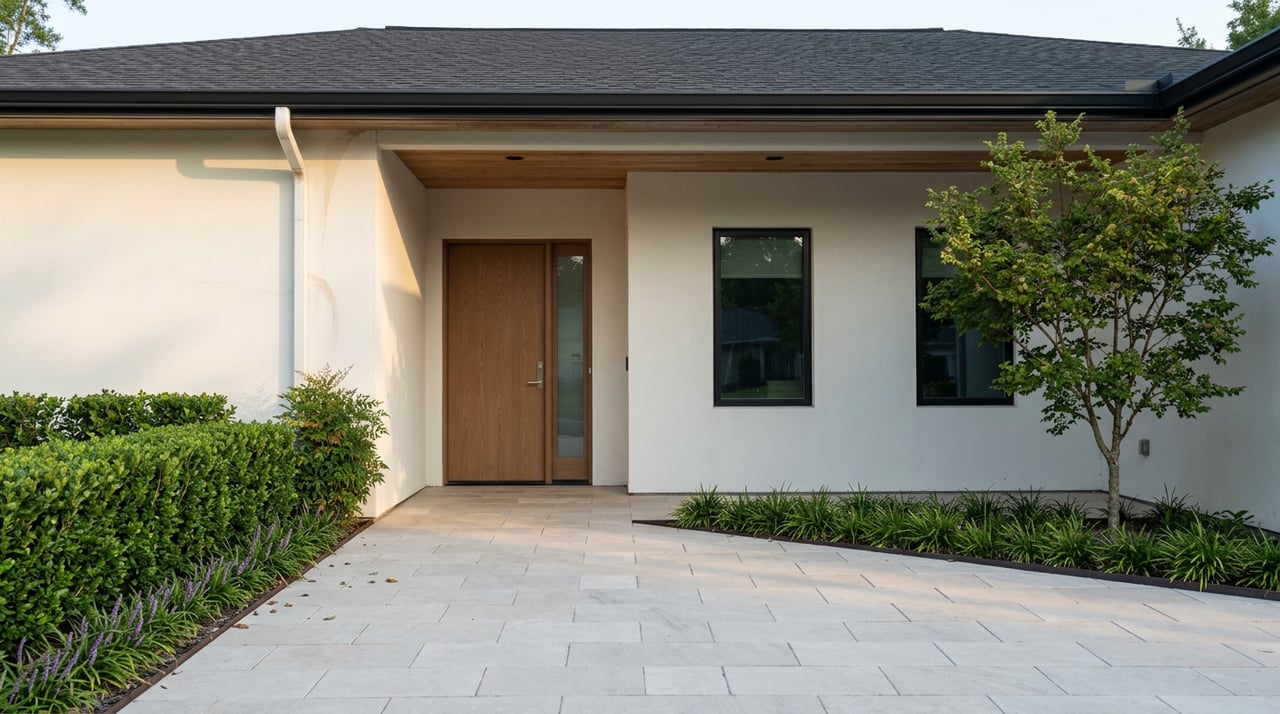
Two Frisco listings. Same subdivision-adjacent price, same square footage, same builder-grade finishes. One estimated monthly payment lands a couple hundred dollars higher than the other. Both disclosures mention a Public Improvement District. So why the gap?
The honest answer is that almost every new-construction neighborhood in Frisco carries some version of this line item, and most buyers stop at "is there one" when the question that actually moves the numbers is "how far into its schedule is this one." A MUD or PID isn't a flat fee that lasts forever by default. It's a financing structure with a start date, a repayment plan, and in some cases, an end date the City of Frisco has already put in writing.
Why the line item exists in the first place
Frisco grew fast, and cities that grow fast often ask new subdivisions to fund their own infrastructure rather than spreading the cost across the whole tax base. Two tools do that work here. A Municipal Utility District is a special taxing district that pays for water, wastewater, and drainage, funded through bonds that homeowners repay via an annual tax rate set by the district's own board. A Public Improvement District, authorized under Texas Local Government Code Chapter 372, funds amenities like parks, streetscapes, and enhanced entrances, usually through a fixed per-lot assessment tied to the bonds that built them.
The distinction matters because the two behave differently over time. A MUD rate is adopted year to year and can drift down as bonds get retired, though it rarely disappears outright while debt is still outstanding. A PID assessment, by contrast, is set at formation and follows its own repayment plan, which means a buyer can often find out exactly how many payments are left before ever writing an offer.
| MUD | PID | |
|---|---|---|
| What it funds | Water, sewer, drainage infrastructure | Parks, streetscapes, entrances, amenities |
| How it's set | Adopted annually by the district board | Fixed at formation under the assessment plan |
| Can it be prepaid | No, tied to district-wide bond debt | Often yes, in full or in part |
| Where it appears | Usually a line item on the county tax bill | County tax bill, a separate bill, or folded into HOA dues |
| Does it end | Trends down as bonds retire, rarely to zero | Yes, on a defined schedule, sometimes decades, sometimes sooner |
What the base tax bill looks like before either one shows up
Frisco's city property tax rate for the current fiscal year sits at $0.425517 per $100 of assessed value, unchanged from the prior cycle. The city also moved its homestead exemption to 20 percent, the maximum allowed under Texas law, up from 15 percent, which trims the average homeowner's city-portion bill by roughly $120 a year. Layer in Frisco ISD's adopted tax rate for the 2025 tax year, $1.0194 per $100, plus county and community college rates, and a Frisco home in Frisco ISD on the Collin County side lands around a 1.96 percent combined rate. On a $600,000 home with a standard homestead exemption, that works out to a total annual bill somewhere between $9,000 and $12,000, before any MUD or PID enters the picture.
That base number is the same whether the subdivision has a special district or not. The MUD or PID is what gets added on top, and it's where two nearly identical listings start to diverge.
A Frisco district that actually shows its work
The clearest proof this mechanism runs on a schedule sits in the city's own Public Improvement District page for the Panther Creek area. The Panther Creek Estates PID was created because a developer, Intermandeco, proposed it as a way to expedite building two city parks, Bob White and Mourning Dove, and to enhance the neighborhood's entrances and green spaces.
"The PIDs were created for the purposes of enhancing the amenities and expediting the timing of their installation."
The city's page puts the total assessment at $3,014.59 per residential lot, payable in full at closing or spread across an annual payment of $241.72 over 20 years. The Panther Creek Estates homeowners association describes the original per-home figure closer to $2,500, a small discrepancy that's worth flagging rather than smoothing over. It likely reflects a different phase or a rounding convention between the city's formal assessment roll and the HOA's own historical account, and it's exactly the kind of detail a buyer should confirm directly with the current tax bill rather than take from either source alone.
What both sources agree on is the structure. Maintenance of the PID-improved areas, aside from the city parks themselves, was handed to the homeowners association through a 20-year lease with the city, and the PID fee was originally billed separately from HOA dues. The board later consolidated the two into a single semi-annual bill, saving on printing, postage, and accounting overhead. That's a detail that never shows up on a generic MUD/PID explainer, and it's exactly the kind of local wrinkle that changes how a buyer should read a Panther Creek disclosure packet: the PID line might not be sitting on the county tax statement at all. It might be folded into what looks like an HOA payment.
And per the city's most recent update to that page, dated March 27, 2025, Frisco was in the process of closing both PID 1 and PID 2 in Panther Creek. That's the part worth sitting with. These obligations end. A neighborhood formed under a PID roughly two decades ago has since watched the city move to retire it, which means the next owner of a home there inherits a materially lighter cost structure than the original buyer did.
The questions that actually change your math
Before writing an offer on a Frisco home with a MUD or PID attached, the useful questions aren't whether the district exists. They're these:
- What year was the district formed, and what's the original repayment term?
- What's the current outstanding balance, and how many years remain?
- Is the charge billed on the Collin County tax statement, billed separately by the district, or folded into HOA dues?
- Can the remaining PID balance be prepaid, and does the seller intend to pay it off at closing or pass it to the buyer?
- Has the MUD rate trended down over the past three tax years, or held flat?
The Collin Central Appraisal District's own property records show the taxing entities attached to any parcel, and Collin CAD mailed its 2026 Notices of Appraised Value for real property on April 15, 2026. Pulling the current tax statement from the Collin County Tax Assessor-Collector's office alongside the appraisal record gives a buyer the actual billed amounts, not an estimate. For anything billed separately, the district's own board minutes or the HOA's financial documents fill in the rest.
Why this matters more at resale than at purchase
A MUD or PID obligation transfers with the property. It doesn't reset or forgive itself because ownership changed hands, and it doesn't disappear because a new buyer didn't benefit from the original construction it financed. Lenders factor the charge into monthly housing costs and debt-to-income calculations the same way they would a mortgage payment, whether it's collected on the tax bill or billed separately. Left unpaid, it can result in a lien, and unresolved, that can escalate to foreclosure, same as unpaid property taxes.
That's exactly why the payoff schedule matters more than the sticker shock of the current bill. A subdivision five years from PID payoff is a fundamentally different holding than one at year two, even if the two homes list for the same price today. The Panther Creek closure shows what that looks like on the other end. The buyer who understands where a property sits on that timeline isn't just avoiding a surprise. They're pricing a cost that a lot of other people looking at the same listing haven't bothered to calculate.
Quick answers
Does the MUD or PID show up in the price I see online? No. Listing prices reflect the home's sale price, not its total carrying cost. The MUD rate, PID balance, and how each is billed live in the tax statement and seller disclosure, not the listing itself.
Can I prepay a PID balance before closing? Often, yes. PID assessments are frequently structured to allow prepayment in part or in full, which some sellers choose to do to make a listing more attractive. Whether that happened here has to be confirmed in the disclosure and title work.
What if the district is billed through the HOA instead of the county? It happens, as it did in Panther Creek after the HOA consolidated PID and dues billing. That means the number on the county tax bill won't tell the whole story. Always ask directly whether any HOA payment includes a PID pass-through.
Do MUD taxes ever fully go away? They can trend down meaningfully as bonds are retired, and in some cases a district is annexed or dissolved, but a MUD tax generally persists in some form as long as district debt remains outstanding. It's the PID side of the equation that tends to have a cleaner, published end date, the way Panther Creek's does.
If you're comparing Frisco listings and want someone to actually pull the current tax statement and district history before you write an offer, rather than after you're surprised by one, that's the kind of legwork Stefany Nau handles as a matter of course. Your Next Move Starts Nau.